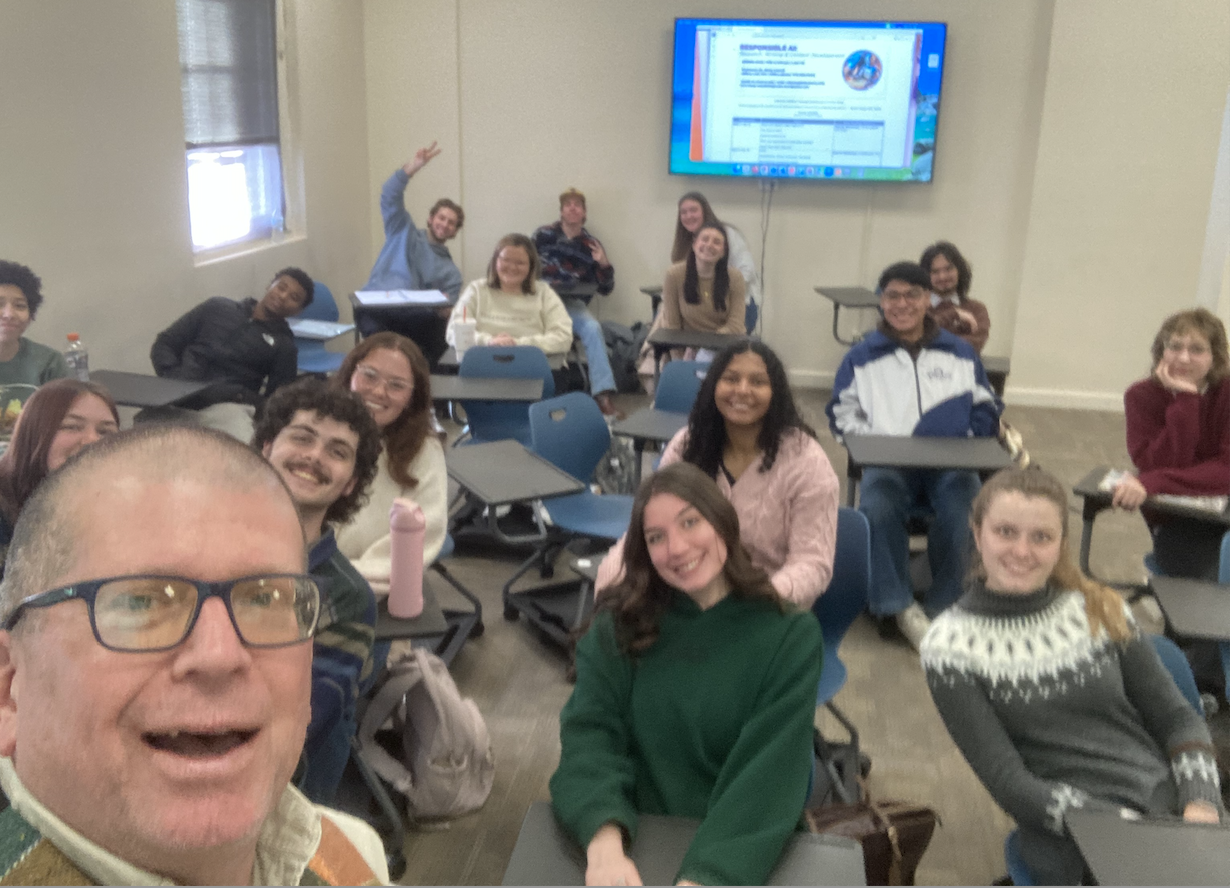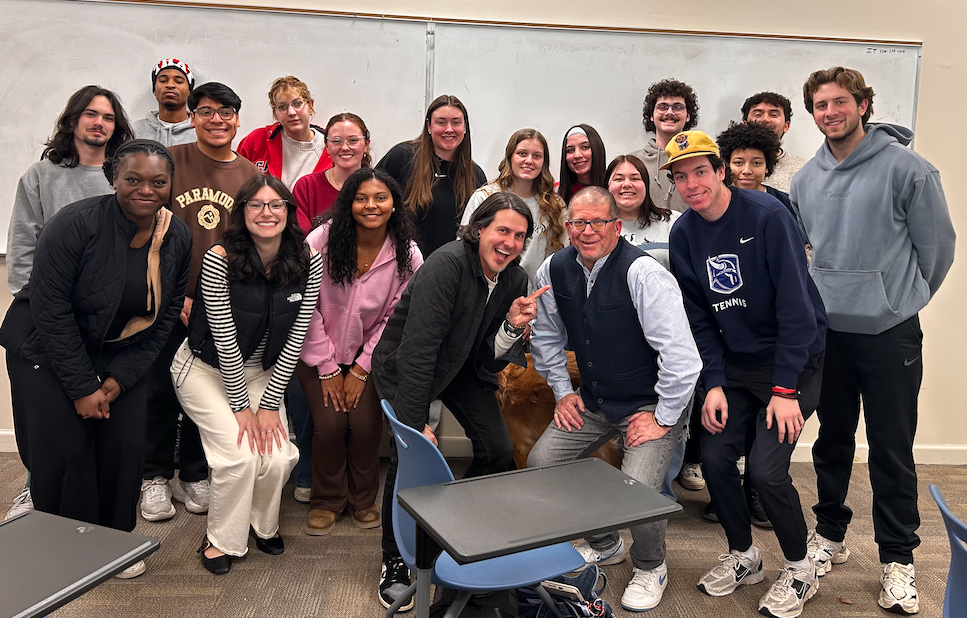
Lose your syllabus? Download another one at no extra charge | Selfie of Berry's first-ever AI course cohort | Our class with Josh
"You're not going to lose your job to an AI, but you're going to lose your job to someone who uses AI." -- Jensen Huang, CEO, Nvidia
Course
schedule
(dynamic and subject to change)
Class
session |
Topics |
Texts,
Readings, Deadlines |
||||||||||||||||||||||||||||||||||||||
Week 1: Jan 12 |
What is AI? A machine learning algorithm. GenAI? LLMs? Agentic AI? Neural networks? How does AI work? How does it learn? Historical context for AI | Read for Wednesday: Course syllabus (quiz likely) View for Wednesday: History of AI, part II | History of AI, part II |
||||||||||||||||||||||||||||||||||||||
Week 2: Jan. 19 |
How does AI learn? Neural networks, machine learning algorithms, AI training, hallucinations and wrong guesses Enshittification: Intro Tool of the day: Claude's Cowork No class Monday: Martin Luther King, Jr. Day |
Read for Wednesday: Due Wednesday: Takeaways/Residuals for Enshittification, Part I (submit hard copy in class) Three resources for us: |
||||||||||||||||||||||||||||||||||||||
Week 3: Jan. 26 |
Wednesday: Efrain demonstrates Perplexity Ethics What does responsible AI collaboration look like? Cognitive offloading? (Re)definitions: Writing | Authorship | Ownership Fact-checking, transparency, citation |
Read for Wednesday: Enshittification, Part II (Takeaways & Residuals due on Canvas) Resources for Wednesday: |
||||||||||||||||||||||||||||||||||||||
Week 4: Feb. 2 |
Monday: Special guest, Josh Huggins, President, Whiteboard Plymouth Builders (I'll explain in class) Content creation: LLMs & their strengths and weaknesses: Claude, ChatGPT, Gemini, Copilot Faith demonstrates NotebookLM Startup setup and capstone project discussion |
Read for Monday: Enshittification, Part III (Takeaways & Residuals due on Canvas) |
||||||||||||||||||||||||||||||||||||||
Week 5: Feb. 9 |
Diego demonstrates Unstuck Monday SuperBowl advertising & AI: The hyping of the Enshittoscene Enshittification, Part III discussion Doctorow's blog: Alexa is coming for us Alyssa A. demonstrates Runway Capstone workshopping, discussion |
Read for Monday: Enshittification, Part IV and conclusion (Takeaways & Residuals due on Canvas) Due Wednesday: Capstone proposals (here are the instructions) |
||||||||||||||||||||||||||||||||||||||
Week 6: Feb. 16 |
Jackson demonstrates Adobe Firefly Capstone project development, workshopping, development Bentham's Panopticon & Complicating privacy (Meta 'smart' glasses) Social media addiction and the attention economy | Claude's release of pro tools | GPT 5.2 discovers mathematical formula Emma-Louise demonstrates Claude Cowork + Code |
Read for Monday: Age of Extraction, Part I (Takeaways & Residuals due on Canvas) |
||||||||||||||||||||||||||||||||||||||
Week 7: Feb. 23 |
Age of Extraction, parts I & II The world of web publishing (html, http, ftp, file and folder mgt) Octavia demonstrates Sora Monday Dr. Carroll demos Claude for a deep dive analytical article on Wayfair In-class activity: Canva + AI Emma B. demonstrates DeepL Wednesday | Read for Monday: Age of Extraction, Part II (Takeaways & Residuals due on Canvas) Due Wednesday: Workflows (instructions on Canvas, where you will submit the assignment) |
||||||||||||||||||||||||||||||||||||||
Week 8: March 2 |
Thinking about AI in layers or levels: Earth, Infrastructure (systems), Retail (Surface) Angeline demonstrates ChatGPT Discussing Wu's Part II and Part III Workshopping our capstone projects Grant demos Framer In-class activity: YouTube and NotebookLM |
Read for Monday: Age of Extraction, Part III (Takeaways & Residuals due on Canvas) News: Tech bloat and the stock market | Custom models | AI watches YouTube to learn, too | Perplexity Computer (new) | Nano Banana update |
||||||||||||||||||||||||||||||||||||||
Week 9: March 16 |
AI News Updates Setting up a blog or website for publishing our work: Blogger.com OR Wordpress.com Sophia demos Suno Finishing up with Age of Extraction Formatting our content (WEDM chapters 1 & 2) Charlotte demos Midjourney |
Read for Monday: Age of Extraction, Part IV (Takeaways & Residuals due on Canvas) AND Writing & Editing for Digital Media (p. 27-31); you might review the entire chapter, as well Bring to class a long-ish (750+ words) original piece you have written (article, paper, etc.) For Wednesday, read through
|
||||||||||||||||||||||||||||||||||||||
Week 10: March 23 |
Earth & Labor Monday's demo: Kara with Dall-e Wednesday's demo: Will with Pika Content development, part II (our blogs), adding an interactive infographic (WEDM, p. 60) Playing the Paper Clip Game | Read for Monday: Atlas of AI, Due Wednesday: Discusson thread contributions for Atlas of AI, Chapters 1, 2 Read for Wednesday: WEDM, Chapters 3 and 4, especially pps 66-80 (headlines, teasers, lists, and hypertext) and pps 113-119 (voice) |
||||||||||||||||||||||||||||||||||||||
Week 11: March 30 |
AI's Needs: Earth (metals and minerals), Power, Water & Data (training) Lily demos Stitch Wednesday's demo: Eli with Copilot The AI Doc: How I Became an Apocaloptimist |
Read for Monday: Atlas of AI, Due Wednesday: Discusson thread contributions for Atlas of AI, Chapters 3, 4 Also due Wednesday: Multimedia content presentations (blogs) |
||||||||||||||||||||||||||||||||||||||
Week 12: April 6 |
Special guest: Ryan Simmons, founder, Brand Red Studios, on AI and filmmaking/videography Ryan's links: Love is Blind (really well done) | Keep Cooking (cheesy but impressive footage | PJ Accetturo (AI commercial director) Khamari demos Moltbook Atlas of AI discussion Does AI belong in the classroom? (Does the classroom belong in a world powered by AI?) Alyssa H. demos Gemini Credibility of information in an AI age: Brand new poll from Quinnipiac Showing off our work |
Read for Monday: Atlas of AI, Due Wednesday: Discusson thread contributions for Atlas of AI, Chapters 5, 6, and conclusion |
||||||||||||||||||||||||||||||||||||||
Week 13: April 13 |
Special guest: Penny Evans-Plants, Berry's CIO, and president of the Summerville Park HOA, speaking on datacenters and their impacts on local communities The Facebook page/group Penny cited Finishing out our capstone projects Setting up our last content creation projects |
Due midnight Wednesday: Completed capstone deliverables |
||||||||||||||||||||||||||||||||||||||
Week 14: April 20 |
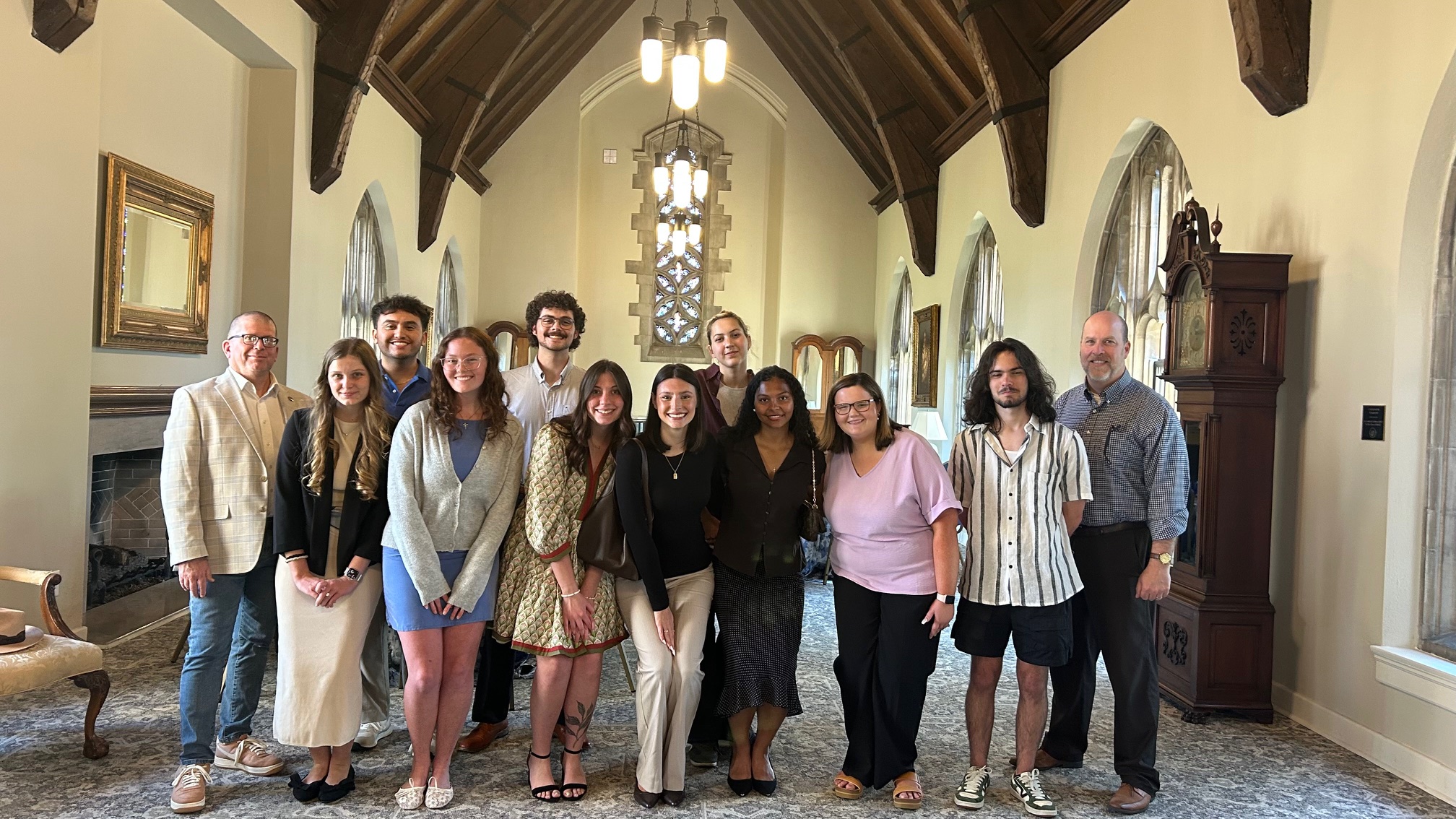
Finishing content creation showcase AI in the Classroom Story pitches (Wednesday budget meeting) Finishing off Atlas of AI . . . maybe 6-7pm, Wednesday, April 22: Dinner with the Provost, Ford Living Room, busines casual attire Group photo from dinner |
Due Wednesday: Story Pitch |
||||||||||||||||||||||||||||||||||||||
Week 15: April 27 |
Presentations |
Due 2pm, May 4: Multimedia Reporting Piece |
|
Final exam period: May 4, 2-4pm (optional Zoom session) Senior grades due 10 am, May 5 Commencement: 9 am, May 9 |
keep your eyes on the prize! |
|||||||||||||||||||||||||||||||||||
|
||||||||||||||||||||||||||||||||||||||||
Course Description This course examines the legal, ethical, and practical considerations of artificial intelligence in research, writing, content creation, and many other human activities. Students will develop critical frameworks for evaluating AI tools, learn best practices for responsible AI integration, and create content that maintains human agency while leveraging AI capabilities. The course emphasizes transparency, accountability, and ethical or responsible decision-making in AI-assisted communication practices. Purpose GenAI creates knowledge sausage on an industrial scale. In this course we are going learn how this sausage is made, how to collaborate with its tools to do better things faster, and, most importantly, what it means to collaborate with AI responsibly, ethically, and transparently, without surrendering authorship or ownership of our work. AI literacy is, therefore, at the core of our mission to help students to become AI-ready. We will also investigate the mind-numbing demands that widespread AI use will make on our planet, including its precious metals and water. In short, this course interrogates the promises and perils of AI. In short, this course is an intervention. We need new literacies, new practices, new skill sets, and all of the critical thinking we can muster. Learning outcomes By the end of this course, students will be able to:
Some lecture, but not much. Lots of doing, including a fair bit of trial and error and sharing results. A great deal of exploration. In a very deliberate community of learning, we will rely on each other to figure this stuff out such that when the course finishes, we will have become Jedi genAI experts capable of leading, teaching, and warning others. This is a highly experimental course on the cusp of a tidal wave that is hitting the planet with unprecedented velocity and effect. That makes us each and all pioneers, space explorers, and deep sea divers. What you will need (required)
Stuff you need to know:
POLICIES
• Attendance: Be on time, just as you would for a job, surgery, or even a haircut. Everyone gets one unexcused absence or late arrival, maybe two, with no questions asked. Stuff happens. After that, however, unexcused and/or unexplained absences and/or lateness will result in point deductions from the "professionalism and participation" portion of your grade -- one point for each unexcused absence and/or late arrival. And late is late, one minute or 10 minutes. What is excused is at the instructor's discretion, so you are best served discussing situations and extraordinary circumstances prior to class whenever possible. Medical attention typically is excused. Weddings, family reunions, vacations, job interviews, grad school visits, Winshape retreats, your roommate’s birthday? These are NOT typically excused, so save your free passes for these non-curricular excursions.
• Late submissions (deadlines): Submit assigned work on time in the format proscribed. Do NOT email the professor your work; he does not offer a printing service. Similarly, posting your assignment somewhere in Canvas will not “count” as making deadline. Late work, including any work submitted any other way than that which is specified and, therefore, authorized, will be penalized one letter grade per class session. Work submitted a week or more after deadline will not be eligible for points. In-class quizzes cannot be made up, regardless of the reason it was missed. The instructor is very reasonable when consulted PRIOR TO deadlines. Finally, please appreciate that deadlines are also for instructors, so that we can move on with our lives, as well.
• Email etiquette: Related to the above, when emailing your instructor, please appreciate that he is a person, not a vending machine for information, grades, etc. Begin each email with an address and a greeting, something like, “Dear Dr. Carroll. I hope this finds you well.” This is courteous, and it doesn’t take much time to write. It is also polite to thank someone for whatever was provided in response to a request. Email is the authorized communication channel for faculty and students at Berry, so you are responsible for checking your email and promptly responding to your instructors as needed or requested.
• Distractions: The instructor needs your attention and your respect, as do your peers seated near or around you. Your instructor is easily distracted, so he needs your help. Practically, this means ZERO unauthorized device use of any kind, including laptops, iPads, smartphones, and Apple watches. As an AI course, we will be using devices, but only for course-related activities. If laptop use is authorized, social media monitoring will not be, for example. Be respectful of the very limited time we have together in the room.
• Decorum: Related to the distractions described above, please remember that the classroom is the professor’s and your fellow students’ workspace and our shared learning space. It’s not your living room or den, in other words, and Covid is over, so be respectful, avoid going to the bathroom during class sessions unless nature is SCREAMING, and change out of those PJs into something appropriate.
• Academic integrity: Because academic integrity is the foundation of college life at Berry, academic dishonesty will have consequences. You are invited to consult the College Catalog for an articulation of the College’s policies with respect to academic integrity. Specific to this course, academic dishonesty includes but is not limited to: unauthorized collaboration, fabrication, submitting the same work in multiple courses, hiring a ghostwriter, asking an AI generator to write something for you that you later submit, failing to cite sources for your research (and, therefore, submitting others’ work as your own), consulting non-authorized sources or texts during an exam period, and aiding and abetting academic dishonesty by another student. Violations will be reported. Students who are sanctioned for violating the academic integrity policy forfeit the right to withdraw from the class with a grade of “W.” Attached to this syllabus is the pledge of academic integrity and AI hygiene that you will be asked to sign for most major assignments.
• Class recording (Zoom): Per Berry policy, students are required to attend class in-person. Classes will not be available for remote learning, at least not regularly or without advance warning and authorization. Any recordings will only be available to students registered for this class and cannot be re-transmitted, distributed, or otherwise shared without the expressed, written consent of the instructor, who asserts the copyright to the intellectual property contained in or by the recording.
• Use of genAI: We will responsibly collaborate with generative AI, including LLMs, and you will receive instruction on what that looks like. We will be transparent about how we use AI tools. The general rule is to treat AI as a research assistant, to collaborate, but to avoid cognitive offloading. We must retain ownership of our work, preventing any AI tool from becoming a co-author of our submitted, copyright-protected work. AI tools are powerful, wonderful collaborators when we know what we are doing and of what we are writing; AI tools are garbage as substitutes for that knowledge. How
you will be graded: To compute
your final grade, add up your point totals, apply the appropriate
percentages, then refer to the grading system summarized here: Definitions
of the grades can be found in the Berry College
Bulletin. “A” students will demonstrate
an outstanding mastery of course material
and will perform far above that required
for credit in the course and far above that usually seen
in the course. The “A” grade should be awarded
sparingly and should identify student performance that
is relatively unusual in the course. Some specifics Academic Success Resources Consultants at the Berry College Writing Center are available to assist students with all stages of the writing process. To schedule an appointment, visit berry.mywconline.com. The Academic Success Center provides free peer tutoring and individual academic consultations to all Berry College students. The ASC Session schedule is available on ASC Website: berry.edu/ASC. Accommodation Statement The Academic Success Center provides accessibility resources, including academic accommodations, to students with diagnosed differences and/or disabilities. If you need accommodations for this or other classes, please visit berry.edu/asc for information and resources. You may also reach out at 706-233-40480. Please note, faculty are not required, as part of any temporary or long-term accommodation, to distribute recordings of class sessions. Finally,
I believe we are here for a good time, not a long time,
so
let’s have some fun! |
||||||||||||||||||||||||||||||||||||||||
|
bc
home | berry
home | email the prof | ||||||||||||||||||||||||||||||||||||||||